Government
Georgia election officials sow doubt on voting machines even as recounts and audits find no fraud
Georgia’s own election officials are publicly split over whether voting machines and ballot QR codes can be trusted as voters head to the polls.
By Staff · October 28, 2026
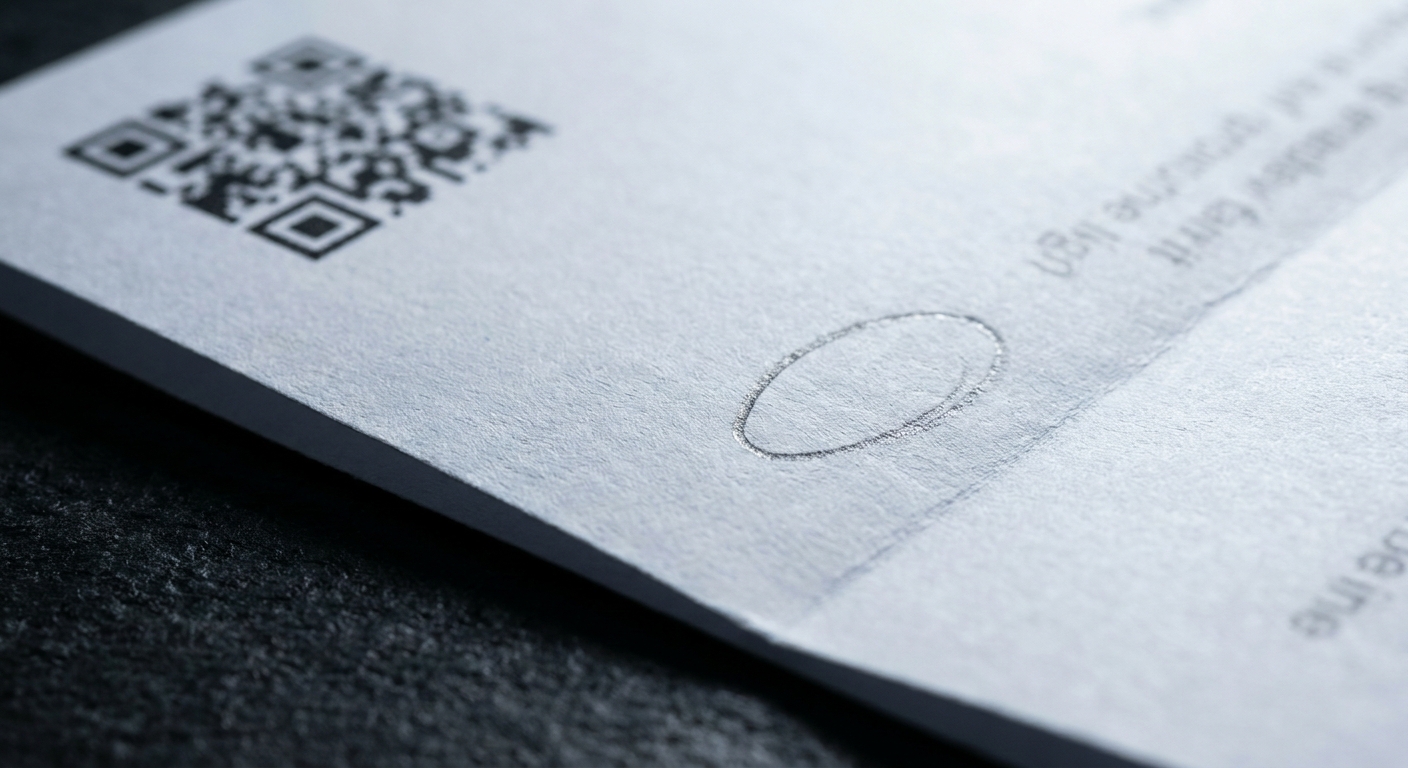
On September 28, the Georgia State Election Board voted to ask the Trump administration to help push for voting-machine software updates — the same week Vice Chair Janelle King told the public “the system itself has proven that there are vulnerabilities, whether they were exploited or not.” Days before Georgians vote on November 3, the five people who set the state’s election rules are publicly disagreeing about whether the machines that count your ballot can be trusted. The board’s new members were appointed after Georgia’s 2024 election-law overhaul, creating a panel far more hostile to the state’s voting machines than its predecessors.
Secretary of State Brad Raffensperger, Georgia’s chief election officer, has repeatedly said the machines are secure, the paper-ballot records are checkable, and the state’s audits and recounts have not found fraud. But the doubts are now coming from inside the election system itself.
The officials questioning the count
The doubts come from people inside Georgia’s election system, not just from campaigns.
- Janice Johnston, who served on the State Election Board until she resigned on June 4, 2026, said of the 2020 presidential result: “There’s no way that this election or recount should have been certified.”
- Julie Adams, a Republican member of Fulton County’s Board of Registration and Elections — the board that certifies results for Georgia’s most populous county — refused to support certifying Fulton’s May 21, 2024 primary, saying she lacked access to the records she needed to verify them. Adams’s position, in her words: “It’s time to fix the problems in our elections by ensuring compliance with the law, transparency in election conduct and accuracy in results.”
- Lt. Gov. Burt Jones signed a December 14, 2020 alternate-elector certificate declaring its signers Georgia’s “duly elected and qualified electors” for Donald Trump, despite Joe Biden’s certified victory in the state. Peter Skandalakis, executive director of the Prosecuting Attorneys’ Council of Georgia, announced on September 13, 2024 that Jones would not be charged over that certificate, saying Jones acted on the advice of attorneys and the evidence showed no criminal intent: “My review of the evidence finds this matter does not warrant further consideration.”
- Former State Election Board member Rick Jeffares shared social-media memes suggesting dead people voted by mail in Georgia in 2020; he has since been replaced by Salleigh Grubbs.
- State Election Board Executive Director James Mills asked the Justice Department and Department of Homeland Security on September 30, 2026 to investigate Georgia’s voting systems and prohibit QR-code-based tabulation, while alleging that Raffensperger’s office had withheld or altered election records.
Raffensperger and Georgia’s local election administrators have said the state’s election system is secure and that several claims in the State Election Board’s federal requests were not supported by facts, with Raffensperger’s office criticizing the timing as risking last-minute chaos.
The cost of election denial
The doubt-casting lands on the people who count ballots.
- Six of ten county election administrators surveyed said their own workers had received threatening calls, bomb threats, or other intimidation ahead of the 2026 midterms.
- Counties have added panic buttons, run drills and equipment tests, and stepped up police coordination — concerns rooted in the threats workers faced after the 2020 election.
- Fulton County election workers Ruby Freeman and her daughter Wandrea “Shaye” Moss won a $148 million defamation judgment against Rudy Giuliani after his false fraud claims about them helped trigger a flood of racist threats and harassment, and they were still fighting to collect that judgment in 2026.
What the ballots actually showed
Georgia’s closest recent statewide contest, the 2020 presidential race, ended with Biden ahead by just over 14,000 votes in the initial machine tally. Rather than rely on that machine count alone, Georgia ran a statewide risk-limiting audit that was a full hand count of the paper presidential ballots — just over 5 million of them.
The results:
- The hand count tallied Biden at 2,475,141 and Trump at 2,462,857.
- That hand-count margin of 12,284 votes confirmed Biden’s win.
- The hand tally narrowed Biden’s margin from just over 14,000 votes to 12,284.
- The largest single correction was 634 additional ballots uncovered in Fulton County, with a net shift toward Trump — a change far too small to alter the outcome.
Raffensperger put it this way: “The numbers don’t lie.”
A December 2020 signature audit by the GBI and Raffensperger’s office examined 15,118 randomly selected absentee-ballot oath envelopes from the 150,431 returned in Cobb County — about 10% — and found zero fraudulent absentee ballots, reporting 99.99% accuracy at a 99% confidence level. The two envelopes flagged in that audit should have triggered cure notices — one signed by the voter’s spouse, one signed on the wrong part of the envelope — but investigators confirmed the voters themselves had cast both ballots; neither was fraud.
Georgia’s 2020 presidential votes were counted three times:
- An initial machine count.
- A statewide hand audit.
- A machine recount requested by the Trump campaign.
None of those counts, nor any state or federal investigation, found evidence of widespread fraud or that Trump actually won the state. Even the FBI’s 2026 seizure of more than 650 boxes of Fulton County ballots and election records came nearly six years after those recounts had already confirmed Trump lost Georgia by close to 12,000 votes.
Georgia courts have ruled that county election officials have a mandatory duty to certify results by the statutory deadline and may not refuse or abstain from certifying based on concerns about fraud, errors, or incomplete information.
What voters can check for themselves
Georgia voters can take steps to verify their own election information before heading to vote.
- Confirm registration status, find a polling place, and view a sample ballot through the Secretary of State’s My Voter Page at mvp.sos.ga.gov.
- Under Georgia law, a losing candidate may request a recount when the margin is no more than 0.5% of all votes cast for that office, by submitting a written request within two business days after results are certified.
- Georgia also conducts risk-limiting audits — a statistically based check, distinct from a candidate-requested recount — and state law and board rules require counties to tally paper ballots and run those audits, with the paper ballot itself remaining the checkable record of each vote.
Voters who want to report a suspected problem, including suspected voter fraud, can call the Secretary of State at 404-656-2871 in metro Atlanta or the voter-fraud hotline at 877-725-9797.